



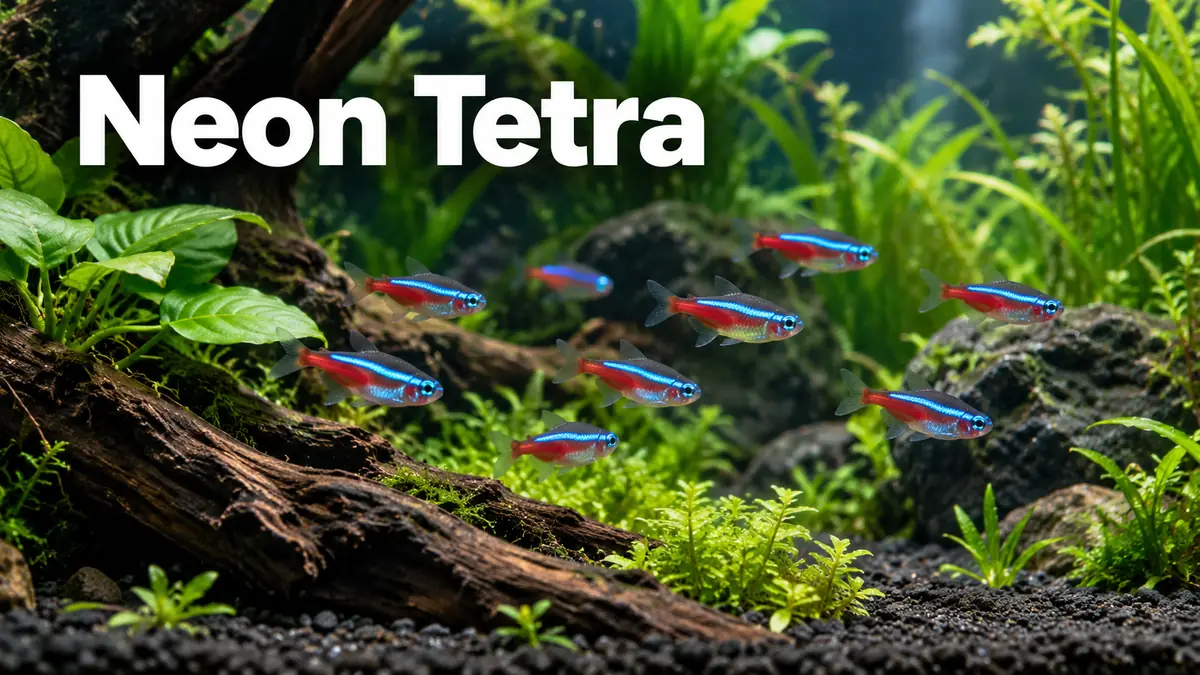
Neon tetras (Paracheirodon innesi) are small, colorful freshwater fish known for their electric-blue stripe, red coloration, and peaceful schooling behavior. They do best in an established aquarium with stable water conditions, a suitable group of their own kind, appropriate food, and enough room to swim.
A practical starting point is an aquarium with a footprint of about 24 × 12 inches or larger, a group of eight to ten or more neon tetras when the tank can support them, and a stable temperature of 70–77°F (21–25°C). Plants and shaded areas provide cover, while open space lets the school move naturally.
Neon tetras are often described as beginner fish, but their small size does not make them suitable for an uncycled or undersized aquarium. Their health depends on the stability of the whole system—not just the number of gallons printed on the tank.
Key Takeaways
- Tank size: A footprint around 24 × 12 inches or larger is a practical starting point. A 20-gallon long aquarium gives the school more swimming room and offers greater flexibility for a community setup.
- School size: Aim for eight to ten or more neon tetras when space and filtration allow. They are social fish and should not normally be kept alone.
- Temperature: Keep the water stable around 70–77°F (21–25°C), using a thermometer and suitable heating equipment when needed.
- Water quality: Establish biological filtration before adding fish. Ammonia and nitrite should remain undetectable in a properly functioning, cycled aquarium.
- Diet: Offer small portions of quality tropical fish food and vary the diet with suitable frozen or live foods.
- Setup: Provide open swimming space alongside plants, shaded areas, and aquarium-safe structures.
- Health: Regular observation, appropriate stocking, water testing, and consistent maintenance help prevent avoidable problems.
Neon Tetra Care at a Glance
| Care requirement | Recommended guidance |
|---|---|
| Scientific name | Paracheirodon innesi |
| Adult size | About 1–1.5 inches |
| Tank footprint | About 24 × 12 inches or larger |
| Larger tank option | 20-gallon long |
| Group size | 8–10 or more when space and filtration allow |
| Temperature | 70–77°F (21–25°C) |
| pH reference | 4.0–7.5 |
| General hardness | 1–12 dGH |
| Diet | Small flakes, micro pellets, frozen or live foods |
| Temperament | Generally peaceful and social |
| Aquarium type | Freshwater, cycled, and stable |
| Lifespan | Several years; varies with care and stock |
The temperature, pH, hardness, aquarium footprint, and group-size figures above are broad reference values from a species-specific care profile. They are not targets that every aquarist should try to reach. Stable, suitable conditions are usually preferable to repeatedly adjusting water chemistry without a clear reason.
What Is a Neon Tetra?
The neon tetra is a small freshwater fish native to South America, particularly parts of the Amazon basin in Brazil, Colombia, and Peru. Its scientific name is Paracheirodon innesi, and it is one of the small characins commonly kept in freshwater aquariums.
Its most recognizable feature is a bright blue stripe along the side of its body, paired with red coloration across the rear portion. These colors stand out in planted aquariums, especially where lighting is subdued and the fish have room to swim together.
Neon tetras are social fish and generally behave more naturally in an appropriate group. They commonly use the middle of the aquarium, moving between open swimming areas and sheltered spaces. Their peaceful temperament makes them popular community fish, but they still need suitable water quality, enough space, and compatible tank mates.

Neon Tetra vs. Cardinal Tetra vs. Green Neon Tetra
Neon tetras, cardinal tetras, and green neon tetras look similar, but they are separate species with their own care requirements.
| Species | Scientific name | Identifying feature | Care note |
|---|---|---|---|
| Neon tetra | Paracheirodon innesi | Blue stripe; red mainly on the rear half | Follow neon-specific husbandry guidance. |
| Cardinal tetra | Paracheirodon axelrodi | Red coloration extends farther along the body | Check its own environmental requirements. |
| Green neon tetra | Paracheirodon simulans | Green-blue lateral stripe; less prominent red | Check species-specific water and habitat needs. |
The red stripe is a useful clue when distinguishing neon tetras from cardinal tetras: on a neon tetra, the red usually stops before reaching the head. The green neon tetra is also a separate species, not simply a color variation. Similar-looking fish can have different environmental requirements, so do not automatically apply identical care recommendations to all three.

Are Neon Tetras Good for Beginners?
Neon tetras can be suitable for beginners who are prepared to maintain an established aquarium and monitor its water quality. They are generally peaceful, stay relatively small, and accept a variety of appropriate foods.
However, their small size does not make them suitable for an unprepared tank. They can suffer from ammonia exposure, nitrite accumulation, sudden environmental changes, overcrowding, and diseases introduced by new fish.
Before Buying Neon Tetras
- A suitable aquarium with room for a proper school.
- A functioning filter and stable temperature.
- A completed biological cycle and reliable water testing.
- Appropriate food and a consistent maintenance routine.
- Compatible tank mates, if keeping a community aquarium.
Do not add fish to a newly filled aquarium and expect them to establish the biological filter. The tank must be able to process fish waste before the fish are introduced.
What Aquarium Conditions Do Neon Tetras Need?
Neon tetras need enough swimming space, stable water chemistry, suitable filtration, and areas of cover. A healthy setup depends on how these elements work together, not just the aquarium’s stated gallon capacity.

What Tank Size and School Size Are Appropriate?
An aquarium with a footprint of about 24 × 12 inches or larger is a practical starting point for planning a neon tetra setup. This footprint corresponds to roughly 14 US gallons in a typical rectangular aquarium. A 20-gallon long aquarium provides additional swimming space and greater flexibility if you intend to keep a community of compatible fish.
A five-gallon aquarium is not a good long-term choice for a typical neon tetra school. Aim for eight to ten or more neon tetras when the aquarium can comfortably support them. A larger suitable group gives these social fish more opportunity to display natural schooling behavior, but the tank must have enough room and biological capacity.
If you’re comparing aquarium dimensions, the Aquarium Calculator can help estimate tank volume; swimming space and stocking requirements still determine whether the aquarium is suitable.
Before deciding how many fish to keep, consider:
- Swimming space: A longer aquarium offers more horizontal swimming room than a tall tank of similar volume.
- Adult size: Plan for the fish as adults rather than stocking based on juvenile size.
- Biological capacity: The filter must process waste produced by the fish and their food.
- Other inhabitants: Additional fish add to the aquarium’s total stocking demands.
- Maintenance capacity: Testing and water changes must be sufficient for the actual aquarium.
There is no universal rule that determines the correct number of neon tetras from gallons alone. A species-only aquarium has different demands from a community tank containing several additional species. Use the Aquarium Stocking Calculator as a preliminary planning aid, then verify school size, adult fish size, filtration capacity, and swimming space separately.
What Water Temperature, pH, and Hardness Do Neon Tetras Need?
A species-specific reference lists 70–77°F (21–25°C), pH 4.0–7.5, and general hardness of 1–12 dGH for neon tetras. These figures describe a broad reference range; they do not mean every aquarium should be pushed toward the most acidic end of the pH range or that frequent adjustments are necessary.
Avoid repeatedly adjusting pH to chase a particular number. Check your source water and aquarium conditions first, and make changes gradually when there is a clear reason.
For most keepers, the priority is stable, suitable water rather than chasing a supposedly perfect number. If your source water differs significantly from the conditions your fish need, investigate your water chemistry and make any necessary changes gradually and deliberately.
| Parameter | What it means | What to do |
|---|---|---|
| Temperature | Water warmth | Use a thermometer and avoid sudden swings. |
| pH | Acidity or alkalinity | Maintain suitable, stable conditions. |
| GH | Calcium and magnesium content | Check that mineral content suits the fish. |
| KH | Buffering capacity | Understand how the water resists pH changes. |
| Ammonia | Potentially harmful waste product | Keep undetectable in a functioning, cycled aquarium. |
| Nitrite | Intermediate product of the nitrogen cycle | Keep undetectable in a functioning, cycled aquarium. |
| Nitrate | Waste-processing end product that can accumulate | Monitor trends and maintain suitable water quality. |
A single acceptable reading does not tell the whole story. Temperature, mineral content, pH, stocking, and the fish’s history all affect how well it adapts to the aquarium.
What Filtration, Heating, Plants, and Lighting Are Needed?
A suitable filter circulates water and provides surfaces where beneficial microorganisms can grow. These microorganisms help process fish waste, while plants and routine maintenance contribute to overall water quality.
Choose equipment according to the aquarium’s dimensions and stocking level. A filter that produces excessive current may make swimming difficult, while inadequate biological filtration can compromise water quality.
- Filtration: Enough biological capacity to process waste, with appropriate water movement.
- Temperature control: Use an appropriately sized heater and a thermometer where heating is required.
- Plant cover: Live plants or aquarium-safe structures that offer shelter.
- Open swimming areas: Space for the school to move together without obstruction.
- Comfortable lighting: Moderate or subdued lighting, with shaded areas where fish can retreat.
Driftwood and suitable aquarium decorations can help create a natural-looking habitat. A densely planted aquarium can work well, provided the fish still have enough room to swim. The goal is a balanced environment with both shelter and open space, not a particular decorative style or expensive equipment setup.
How Do You Prepare an Aquarium and Introduce Neon Tetras Safely?
Prepare the aquarium before purchasing the fish. The most important step is establishing biological filtration so fish waste can be processed without exposing the animals to harmful ammonia and nitrite.
The nitrogen cycle involves beneficial microorganisms that convert ammonia into nitrite and then into nitrate. Ammonia and nitrite can harm fish, while nitrate generally accumulates over time and needs to be managed.
Follow this sequence:
- Prepare the aquarium. Install the filter, suitable heating equipment, substrate, plants, and aquarium-safe decorations. Treat tap water with an appropriate water conditioner.
- Establish biological filtration. Follow a fish tank cycling guide and allow the biological filter to develop. Do not assume a tank is cycled simply because it has been running for a certain number of days.
- Test the water. Confirm that ammonia and nitrite are undetectable and that the aquarium can process its expected waste load. Check nitrate, temperature, and other relevant parameters.
- Check overall readiness. Confirm that the filter is functioning, the temperature is stable, and the aquarium can support the planned stocking level.
- Acclimate the fish. Use a suitable method that accounts for differences between transport water and the aquarium. Avoid sudden temperature or water-chemistry changes.
- Monitor after introduction. Observe appetite, swimming, breathing, and general behavior. Test water promptly if fish appear distressed, and avoid increasing stocking too quickly.
A cycled aquarium is not automatically a mature or trouble-free aquarium. Its biological capacity must match the number of fish and the amount of food being added.
Quarantine can also reduce disease risk. Keep new fish in a separate, appropriately equipped aquarium for observation before introducing them to an established community, particularly when their health history is uncertain.
What Do Neon Tetras Eat, and How Often Should You Feed Them?
Neon tetras are omnivores. In the wild, they consume small invertebrates and other available food sources. In aquariums, they can eat quality flakes, small pellets, and appropriately sized frozen or live foods. A varied diet is preferable to relying on one food type alone.
Suitable options include:
- High-quality tropical fish flakes broken into small pieces.
- Micro pellets that fit comfortably into their mouths.
- Frozen or live daphnia and baby brine shrimp.
- Suitable small insect larvae as part of a varied diet.
Offer small portions once or twice daily as a practical starting routine, adjusting the quantity to the fish’s appetite and condition. Food should be small enough for them to eat comfortably.
Avoid feeding more simply because the fish rush to the surface when you approach. Remove excess food before it decomposes and contributes to the aquarium’s waste load. If a fish repeatedly refuses food, consider whether it is being outcompeted, whether the food is too large, whether it is still settling in, or whether water conditions or illness could be affecting its appetite.
How Do You Keep Neon Tetras Healthy?
Long-term health depends on stable water conditions, suitable stocking, appropriate food, and regular observation. Neon tetras can live for several years in captivity, but lifespan varies. Focus on the conditions that support good health: a properly cycled aquarium, suitable temperature, good water quality, an appropriate school, and compatible tank mates.
What Routine Maintenance Helps Neon Tetras Thrive?
A consistent maintenance routine helps prevent water-quality problems and makes it easier to notice changes before they become serious.
- Daily: Check that the filter and heater are working, observe swimming and appetite, and remove uneaten food.
- Weekly starting routine: Consider a partial water change of approximately 10–25% for an established aquarium, then adjust the amount and frequency based on water tests, stocking, feeding, and waste accumulation.
- Weekly: Test water quality according to the aquarium’s needs, especially ammonia, nitrite, and nitrate. Remove accumulated waste and inspect the substrate, plants, equipment, and water flow.
- Monthly and as needed: Inspect and clean filter components according to the manufacturer’s instructions without unnecessarily destroying beneficial biological media. Review feeding and stocking if nitrate rises or waste accumulates quickly.
The suggested water-change range is a starting point, not a universal prescription. A lightly stocked, planted aquarium may have different needs from a heavily stocked community tank. See the guide to performing a partial water change and use water tests, stocking levels, and waste accumulation to determine whether your routine needs adjustment.
When changing water, use appropriately conditioned replacement water at a suitable temperature. Avoid abrupt changes in temperature or chemistry, especially when the source water differs significantly from the aquarium.
If ammonia or nitrite becomes detectable, do not simply wait until the next scheduled maintenance day. Investigate the cause, take appropriate corrective action, and verify that the biological filter is functioning properly.
What Warning Signs Should Neon Tetra Keepers Watch For?
Changes in appearance or behavior can indicate stress, poor water quality, injury, or disease. A visible symptom alone does not establish a diagnosis.
- Loss of coloration: Consider stress, acclimation, lighting, water conditions, or illness.
- Reduced appetite: Check food size, competition, water quality, and other signs of distress.
- Unusual swimming or isolation: Look for abnormal breathing, poor coordination, or changes affecting other fish.
- White spots or skin changes: Several conditions can produce visible marks, so appearance alone is not enough to identify the cause.
- Sudden deaths: Check water quality and equipment, review recent changes, and consider disease or problems associated with introducing new fish.
Neon tetra disease is associated with the microsporidian parasite Pleistophora hyphessobryconis. It can damage skeletal muscle and cause abnormal movement or pale, marbled-looking muscle tissue. Confirmation may require microscopic examination of affected tissue, and there is no effective treatment for infected fish.
Do not assume that every pale fish or white patch indicates neon tetra disease. Discrete white spots can occur with other conditions, including ich, while similar-looking changes may have different causes. If serious disease is suspected, separate affected fish when appropriate, avoid transferring potentially contaminated equipment between aquariums, and seek advice from a fish-experienced veterinarian or qualified aquatic health professional.
Prevention is more useful than reacting after a problem has spread. Select healthy-looking fish, quarantine new arrivals where possible, and maintain suitable water conditions.
Which Fish Can Live With Neon Tetras?
Neon tetras generally suit peaceful community aquariums with fish that are similarly sized, have compatible environmental needs, and do not prey on them. Compatibility depends on adult size, temperament, individual behavior, and the aquarium’s conditions.
| Potential tank mate | Suitability | Important consideration |
|---|---|---|
| Small rasboras | Often suitable | Match water conditions and allow room for both groups. |
| Corydoras catfish | Often suitable | Provide bottom space and meet the catfish’s social needs. |
| Small, peaceful tetras | Potentially suitable | Check adult size, schooling, and water requirements. |
| Guppies | Conditional | Consider water preferences and feeding competition. |
| Betta fish | Conditional | Individual temperament varies; monitor for aggression. |
| Freshwater shrimp | Conditional | Tiny shrimplets may be eaten. |
| Angelfish | Risky as they mature | Larger individuals may prey on small tetras. |
These are general compatibility considerations, not guarantees. Even a relatively peaceful fish can create problems if it grows large enough to eat smaller inhabitants or requires substantially different water conditions.
Before combining species, use the Fish Compatibility Checker as a preliminary screen, then verify each species’ adult size, temperature and water requirements, feeding behavior, social needs, and available space. Introduce new inhabitants cautiously and monitor the aquarium after changes.
The best tank mates complement the aquarium’s conditions rather than forcing you to compromise the needs of one species for another.
Can Neon Tetras Breed in a Home Aquarium?
Yes, neon tetras can breed in captivity, but raising fry successfully is more demanding than maintaining adults in a community aquarium.
Breeding often requires a separate, carefully controlled setup with suitable spawning surfaces or fine-leaved plants, subdued lighting, and soft, acidic water. These conditions can differ from the routine water conditions used for adult fish.
Adults may eat their eggs, and newly hatched fry require food small enough for them to consume. The breeding setup must therefore account for spawning, egg protection, and the first stages of growth.
A dedicated breeding aquarium is generally more practical than trying to raise a large number of fry in a busy community tank. Breeding-specific water conditions should not automatically be imposed on an established community aquarium.
Final Recommendation
Neon tetras can be rewarding freshwater fish when their social needs, aquarium environment, and long-term care are planned together.
Start with a suitable, fully cycled aquarium. Provide a proper school, stable water conditions, appropriate food, and compatible companions. Monitor water quality consistently and respond promptly when fish show signs of distress.
The most important step happens before the fish enter the tank: establish an environment that can safely support them. Consistent maintenance and careful observation will do far more for their health than repeatedly adjusting water chemistry or treating symptoms without understanding their cause.
Sources
- Seriously Fish: Neon Tetra (Paracheirodon innesi) — species-specific reference for aquarium footprint, temperature, pH, hardness, group size, habitat, and behavior.
- Merck Veterinary Manual: Mycotic Diseases of Fish — veterinary reference for neon tetra disease, its effects, and diagnosis.

Ethan Caldwell
Freshwater Fish Care Writer
Ethan writes about freshwater fish care, aquarium setup, water quality, and choosing compatible tank mates.
View Author Profile
1 Comment
Pingback: 10 Best Aquarium Fish for Beginners: Freshwater Guide - tankbloom.com