



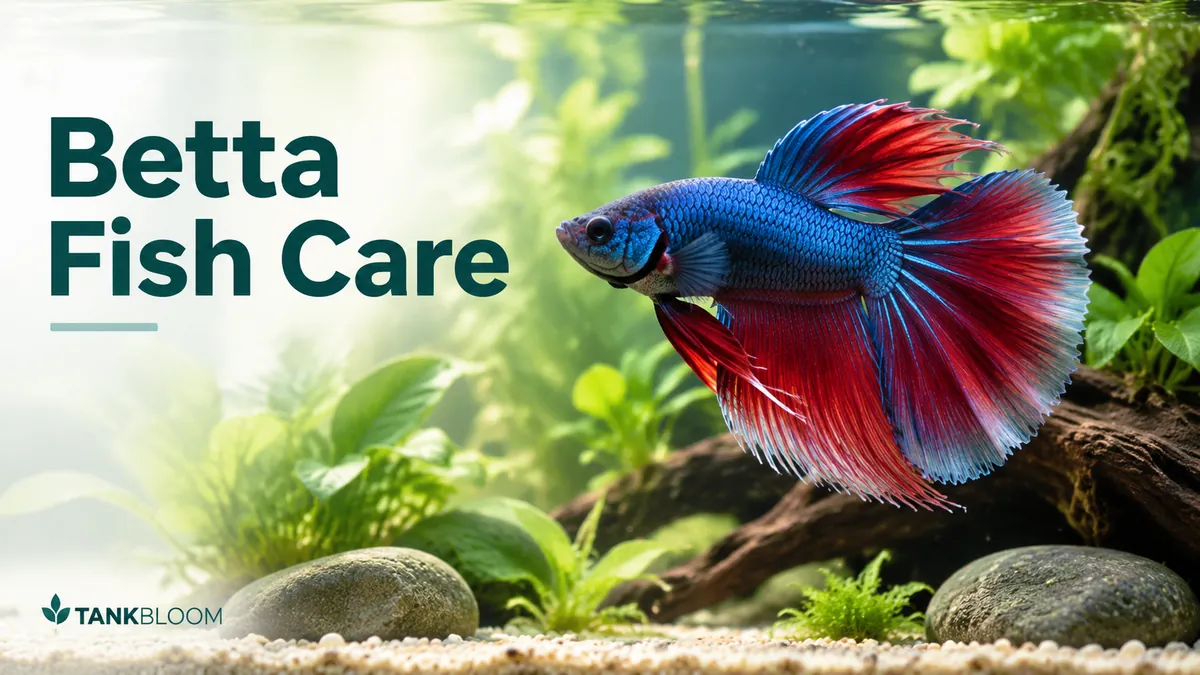
Betta fish care means providing a spacious, heated, filtered and fully cycled aquarium, a suitable diet, stable water conditions and regular maintenance. Bettas (Betta splendens) are tropical freshwater fish that need more than a small bowl to thrive. With the right setup and a consistent routine, they can make rewarding pets for beginner aquarists.
The most important priorities are straightforward: provide enough swimming space, keep the water warm and clean, establish beneficial bacteria before introducing the fish, feed appropriate portions and watch for changes in behavior.
Betta Fish Care at a Glance
| Care requirement | Practical recommendation |
|---|---|
| Aquarium size | 5 gallons or larger is a practical starting point for one betta. |
| Water temperature | Aim for 78–80°F (25.5–26.5°C), keeping it stable. |
| Filtration | Use a filter with gentle or adjustable flow. |
| Aquarium cycle | Establish biological filtration before adding the fish. |
| Ammonia | 0 ppm. |
| Nitrite | 0 ppm. |
| pH | Near neutral is a reasonable target; stability matters. |
| Food | Complete, protein-rich food formulated for bettas. |
| Feeding frequency | Usually one or two small feedings daily, adjusted to the food and fish. |
| Water changes | A partial weekly change is a starting point; test results determine the actual need. |
| Habitat | Safe plants, resting places, hiding spots and open swimming space. |
| Routine | Observe the fish daily and monitor water quality regularly. |
These recommendations are starting points rather than guarantees. Aquarium size, filtration, stocking, feeding and water conditions all influence the care routine.
What Size Tank Does a Betta Fish Need?
A 5-gallon aquarium or larger is a practical starting point for one betta. Larger aquariums often make it easier to maintain stable temperatures and water quality while providing more room for swimming, plants and enrichment.
Small bowls and decorative containers can be difficult to heat, filter and maintain consistently. Although bettas can breathe air at the surface, this ability does not remove their need for clean water or adequate living space.
When choosing an aquarium, consider more than its stated capacity. A longer tank can provide useful horizontal swimming space, while a suitable lid helps prevent jumping.
What Should a Betta Aquarium Include?
A comfortable aquarium needs room to swim, areas to rest and places to retreat. Arrange plants and decorations around the sides or back without filling every open area.
Choose a sturdy aquarium stand, a secure lid and equipment suited to the tank’s volume. Keep the aquarium away from direct sunlight, drafts and locations where room temperature changes sharply. Direct sunlight can also encourage unwanted algae growth and temperature fluctuations.
A well-planned aquarium should be easy to inspect, clean and maintain. Elaborate decoration is unnecessary if it reduces swimming space or creates hazards.

Essential Betta Fish Equipment and Supplies
The right equipment helps keep the aquarium stable and reduces the amount of emergency troubleshooting required later.
Heater and thermometer
Bettas need warm, stable water. Choose a heater suitable for the aquarium and verify the actual water temperature with a separate thermometer rather than relying only on the heater’s setting. The Aquarium Heater Calculator can help estimate an appropriate heater size for your setup.
Gentle aquarium filter
A suitable filter supports beneficial bacteria and helps remove suspended debris. Sponge filters and adjustable low-flow filters can work well when sized and maintained correctly.
Water conditioner and test kit
Use a suitable conditioner to treat tap water and a reliable aquarium test kit to monitor ammonia, nitrite, nitrate and pH. Clear water alone cannot tell you whether the aquarium is safe.
Safe plants and decorations
Live or suitable artificial plants, smooth hiding places and resting areas help create a more engaging habitat. Avoid sharp edges, unstable decorations and objects that can snag delicate fins.
You may also need a siphon or gravel vacuum, a dedicated bucket for aquarium maintenance and an aquarium light if you keep live plants. Keep household cleaners and soap away from aquarium equipment.
How to Cycle a Betta Fish Tank Before Adding Fish
Aquarium cycling establishes the beneficial bacterial community that processes fish waste. Without a functioning biological filter, ammonia and nitrite can accumulate to dangerous levels even when the water looks clean.
The nitrogen cycle works in stages:
- Fish waste, uneaten food and decomposing material produce ammonia.
- Beneficial microorganisms convert ammonia into nitrite.
- Other microorganisms convert nitrite into nitrate.
- Water changes and, where appropriate, plant uptake help control nitrate accumulation.
Ammonia and nitrite are toxic to fish. Nitrate is generally less acutely toxic at typical aquarium concentrations, but it still needs monitoring and management.
How Do You Know When the Aquarium Is Cycled?
Do not rely on a fixed number of days or weeks. Test results, not elapsed time, determine whether the biological filter is ready.
Use a tested fishless cycling method with a suitable ammonia source and an aquarium test kit. Follow the method’s instructions, monitor ammonia and nitrite, and allow the biological filter to develop.
A useful completion criterion is that the aquarium can process the method’s measured ammonia input and return both ammonia and nitrite to 0 ppm within approximately 24 hours. Confirm that the results are repeatable, the temperature is stable and the aquarium is ready to support its intended fish load. Nitrate may rise during cycling, although the amount depends on the system and water chemistry.
Do not add a betta simply because the water has been running for a week or because a bottle of beneficial bacteria has been added. Such products may help establish a biofilter, but their use does not replace testing.
If you already have a betta in an uncycled aquarium, do not wait for the cycle to finish before taking care of the fish. Test the water frequently, manage detectable ammonia and nitrite with appropriate partial water changes, and preserve the biological filter while it develops.
How to Acclimate a Betta Fish
Acclimation helps reduce the shock that can occur when a fish moves between water with different temperatures and chemistry.
- Prepare the aquarium in advance, including stable temperature and functioning filtration.
- Follow the seller’s or transport provider’s guidance for safely introducing the fish.
- Avoid pouring transport water into the aquarium unnecessarily.
- Transfer the fish gently, using a suitable container or method that minimizes handling stress.
- Observe the fish after introduction and check that it can swim and reach the surface normally.
The exact acclimation method depends on the transport conditions and the differences between the source and destination water. Do not assume that one fixed acclimation time is right for every fish.
Betta Fish Water Parameters, Temperature and Filtration
Stable water conditions matter more than chasing an exact number with chemicals. Bettas need warm water, low levels of toxic waste and filtration that supports a healthy biological cycle.
What Temperature Is Best for a Betta Fish?
Aim for 78–80°F (25.5–26.5°C) as a practical target for a typical betta aquarium. Keep the temperature stable rather than allowing large swings between day and night.
A heater is usually worthwhile, even if the room feels warm. Indoor air temperature can vary, and aquarium water may be cooler than the room. Choose a heater suitable for your tank and check the temperature with a thermometer.
Do Betta Fish Need a Filter?
Yes. A filter is strongly recommended because it supports beneficial bacteria and helps remove suspended particles. However, stronger flow is not necessarily better.
Long-finned bettas may struggle in powerful currents, and all bettas need places where they can rest without constantly swimming against moving water. Choose a gentle or adjustable filter and redirect its outlet if needed.
If your fish repeatedly gets pushed around, struggles to remain in place or avoids part of the aquarium because of the current, reduce the flow.
What pH and Water Conditions Are Suitable?
A pH near neutral is a reasonable starting point for many betta aquariums. A value around 7 is a practical target, but the stability of the water and its compatibility with your source water are important too.
| Water measurement | Practical goal | What to do if the result is concerning |
|---|---|---|
| Temperature | About 78–80°F | Check the heater, thermometer and room conditions. |
| pH | Near neutral; avoid sudden shifts | Confirm the reading and investigate before adjusting. |
| Ammonia | 0 ppm | Take prompt corrective action and check the biological filter. |
| Nitrite | 0 ppm | Take prompt corrective action and check the biological filter. |
| Nitrate | Keep low and monitor its trend | Review water changes, feeding and accumulated waste. |
Ammonia and nitrite should not be treated as acceptable simply because the fish still appears active. If either is detectable, investigate promptly.
For an abnormal reading, use this sequence:
- Confirm the result with a reliable test kit.
- Perform a suitable partial water change using conditioned water close to the aquarium’s temperature.
- Check whether the filter is working and whether the aquarium is fully cycled.
- Remove uneaten food and obvious decomposing material.
- Retest and continue monitoring until the problem resolves.
A single water change may not solve an ongoing problem. The aquarium may need further water changes while its biological filter recovers or develops. Avoid washing filter media under untreated tap water or replacing all of it at once, as this can damage the beneficial bacterial community.
Do not add pH-adjusting chemicals simply because one reading differs slightly from a preferred number. First verify the result and assess the source water. Rapid changes can create additional stress.
What Do Betta Fish Eat, and How Often Should You Feed Them?
Bettas are carnivorous fish. Feed a nutritionally complete food formulated for bettas, with suitable animal-based protein, rather than relying on generic tropical flakes or treats as the entire diet.
Choosing a Suitable Betta Diet
A quality betta pellet or other complete betta-specific food is a practical staple. Appropriate frozen or freeze-dried foods can provide variety, but treats should not replace a balanced staple diet.
Choose food that the fish can eat comfortably, and check the manufacturer’s feeding directions. Pellet size, nutritional composition and the individual fish’s appetite all affect how much food is appropriate.
How Much and How Often Should You Feed?
Many adult bettas do well with one or two small feedings per day, depending on the food and the fish’s needs. Start with small portions, observe how the fish eats, and adjust rather than following a rigid pellet count.
Watch for signs that the feeding routine needs attention:
- Food remains uneaten after feeding.
- The fish develops a noticeably swollen abdomen.
- The fish repeatedly refuses food.
- Waste builds up quickly between maintenance sessions.
Remove uneaten food instead of leaving it to decompose. Overfeeding can worsen water quality, so feeding decisions affect both the fish’s nutrition and the aquarium’s biological load.
If a betta suddenly stops eating, check temperature and water quality, observe its behavior and look for other signs of illness. Do not assume that the fish is simply fussy.

Plants, Hiding Places and Aquarium Enrichment
A good betta habitat provides cover, resting places and open water for swimming. Plants and decorations should support the fish’s behavior without crowding the aquarium or creating hazards.
Choosing Safe Live or Artificial Plants
Live plants can provide cover and make an aquarium more natural-looking. Java fern and Anubias are popular options because they can grow without demanding conditions when matched to suitable lighting and care.
Artificial plants can also be used, but choose soft or smooth materials. Check for sharp edges and rough points that could snag delicate fins.
Hiding Places, Resting Areas and Open Swimming Space
Bettas may rest on leaves or other stable surfaces near the water. They also benefit from cover that allows them to retreat when they feel exposed.
Arrange plants and hiding places around the sides and back while preserving open swimming space. Decorations should not block access to the surface, where bettas regularly breathe air using their labyrinth organ.
Avoid sharp ornaments, unstable structures and cramped layouts. A beautiful aquarium should still be easy to inspect, clean and maintain.
How to Maintain and Clean a Betta Fish Tank
Regular, modest maintenance is usually better than waiting until the aquarium looks dirty and then performing a drastic clean. Clear water does not guarantee safe water, so combine observation with testing.
Daily Checks for Behavior, Appetite and Equipment
Spend a minute observing the fish and checking the equipment. Look for normal swimming, a steady appetite, intact fins, a working filter and a stable temperature.
You do not need to perform a large water change every day in a well-established aquarium. The goal is to notice changes early and keep conditions steady.
Partial Water Changes and Water Testing
For many established, lightly stocked betta aquariums, a partial water change of around 20–30% weekly can be a useful starting routine. The correct frequency and amount depend on tank size, stocking, feeding, plants, filtration and test results.
During a water change:
- Prepare replacement water and treat it with a suitable conditioner.
- Match the replacement water reasonably closely to the aquarium’s temperature.
- Remove some old water, using a siphon to collect debris where practical.
- Add the replacement water carefully.
- Confirm that the filter and heater are operating normally.

Test ammonia and nitrite if the aquarium is new, if the fish appears unwell, or if there has been a change in the system. In a stable aquarium, regular testing and monitoring nitrate help you judge whether the maintenance routine is working.
If tests reveal ammonia or nitrite, do not wait for the next scheduled water change. Take appropriate corrective action and test again.
Safe Filter and Substrate Maintenance
Remove debris from the substrate as needed, but avoid trying to make every surface sterile. Beneficial bacteria live on filter media, substrate and other aquarium surfaces.
When filter media needs cleaning, gently rinse it in removed aquarium water or use a method recommended for the filter that preserves its biological function. Do not routinely replace all the media at once unless there is a specific reason and you have a plan to preserve biological filtration.
Avoid washing aquarium equipment with soap or household cleaners. Residues can harm fish even when the equipment looks clean.
A Simple Betta Fish Care Schedule
| Frequency | What to do |
|---|---|
| Daily | Observe behavior and appetite; check temperature and equipment; feed appropriate portions. |
| Weekly | Test water as appropriate, review nitrate trends and perform a partial water change based on conditions. |
| As needed | Remove algae and debris; inspect plants and decorations; clean filter components according to their condition. |
| After a problem or major change | Test water more frequently and confirm that the aquarium remains stable. |
This schedule is a starting point, not a substitute for testing. A newly established aquarium or one with detectable ammonia or nitrite may need much closer monitoring.
Betta Fish Health, Behavior and Warning Signs
A healthy betta generally shows normal swimming, interest in food, regular access to the surface and fins without progressive damage. However, behavior varies between individuals, so changes from a fish’s usual pattern can be more informative than a single observation.
What Does a Healthy Betta Fish Look Like?
Look for a combination of signs rather than relying on color alone.
- The fish responds to its surroundings and swims normally for its usual activity level.
- It shows interest in food and eats regularly.
- Its fins and body have no new, worsening damage, unusual growths or persistent abnormal markings.
- Its breathing appears normal, without prolonged gasping or unusual respiratory effort.
- It can rest and reach the surface without struggling against the current.
Bettas naturally visit the surface to breathe air, so an occasional trip upward is normal. Repeated gasping, rapid breathing or difficulty swimming deserves closer attention.

Common Signs of Stress or Illness
Watch for persistent lethargy, loss of appetite, clamped fins, unusual spots, worsening fin damage, abnormal swimming or changes in breathing. These signs are not specific to one disease; several conditions can produce similar symptoms.
Start by assessing the environment. Check the temperature, test the water and confirm that the filter works properly. Recent changes, such as a new decoration, a malfunctioning heater or a change in feeding, may also provide useful clues.
What to Do if Your Betta Becomes Lethargic or Stops Eating
Use a simple troubleshooting sequence:
- Check temperature: Confirm the reading with a thermometer.
- Test water: Measure ammonia and nitrite, and review nitrate and pH.
- Inspect equipment: Make sure the heater and filter work and that the current is not excessive.
- Review recent changes: Consider new food, decorations, water treatments or changes in maintenance.
- Observe other symptoms: Look for changes in breathing, swimming, fins or the body.
If the water contains detectable ammonia or nitrite, take prompt corrective action. Do not automatically medicate a fish based on one symptom, because the wrong treatment may add stress or delay appropriate care.
Seek advice from an aquatic veterinarian or another appropriately qualified fish-health professional when symptoms are severe, persist, worsen or remain unexplained. Difficulty breathing, loss of balance or rapid deterioration warrants urgent attention.
How Long Do Betta Fish Live?
Betta fish commonly live around 3–5 years with appropriate care, although individual lifespan varies. Genetics, previous living conditions, diet, disease and long-term water quality can all influence longevity.
The most useful approach is to focus on factors you can control: a properly cycled aquarium, stable temperature, suitable nutrition, routine maintenance and early attention to health changes. No particular tank size or feeding schedule guarantees a specific lifespan.
Frequently Asked Questions About Betta Fish Care
Are betta fish easy to care for?
Bettas can be a good choice for beginners when their aquarium is properly equipped and maintained. They still need warm, stable water, appropriate food, filtration and regular observation. A small container does not eliminate those needs.
Can a betta fish live in a bowl?
A bowl is generally a poor long-term choice because it limits swimming space and makes it harder to maintain stable water conditions and install suitable equipment. A properly equipped aquarium of 5 gallons or larger is a more practical starting point for one betta.
Can betta fish live with other fish?
Some bettas tolerate carefully selected tank mates, while others become territorial or aggressive. Compatibility depends on temperament, aquarium size, water requirements and the behavior of the other animals. Do not assume that any particular combination will always work.
Can you keep more than one betta together?
Keeping bettas together can lead to serious aggression and injury. Male bettas should generally be housed separately, and female groups are not automatically safe. For most beginners, one betta per aquarium is the more straightforward and responsible choice.
What should you do if your betta stops eating?
First, check temperature and water quality, then look for other changes in behavior or appearance. Review the food and feeding routine, but do not assume that refusal to eat is simply pickiness. If the problem persists or appears with other symptoms, seek qualified advice.
Build a Stable Routine for Your Betta
Successful betta fish care is less about constant adjustments and more about maintaining a suitable, stable environment. Start with a properly sized aquarium, establish biological filtration, keep the water warm, feed carefully and follow a maintenance routine guided by observation and water tests.
If you already have a betta, your best next step is to check the aquarium’s temperature and test the water. If you are preparing for your first fish, establish and verify the aquarium’s cycle before bringing it home. These basic habits give your betta a much better foundation for long-term health

Ethan Caldwell
Freshwater Fish Care Writer
Ethan writes about freshwater fish care, aquarium setup, water quality, and choosing compatible tank mates.
View Author Profile
3 Comments
Pingback: 10 Best Aquarium Fish for Beginners: Freshwater Guide - tankbloom.com
Pingback: Best Betta Fish Tank Mates: Fish, Snails & Shrimp - tankbloom.com
Pingback: Aquarium Filtration Guide: Types, Media, & Flow Rate Explained - tankbloom.com